Rigorous testing. Clear reporting.
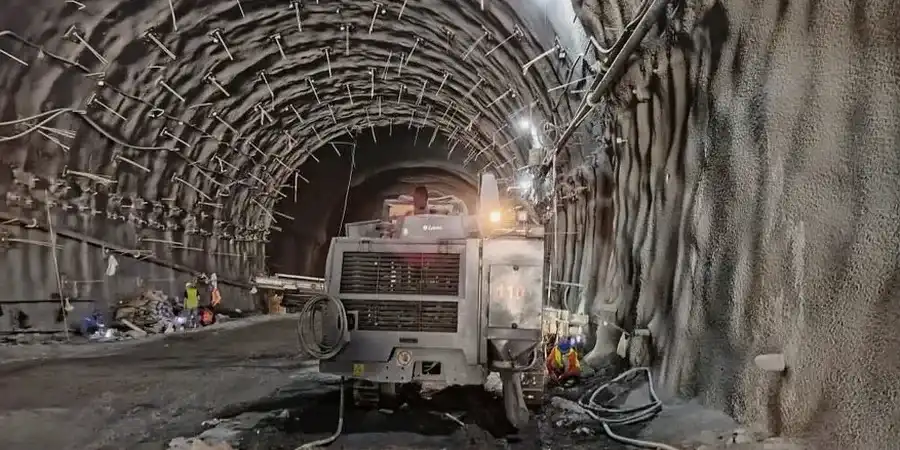
LEARN MOREUnderground excavations in Ottawa represent a specialized branch of geotechnical engineering that encompasses the planning, design, construction, and monitoring of subterranean spaces. From tunneling through sensitive marine clays to excavating deep shafts for infrastructure, this category addresses the unique challenges posed by the capital region's subsurface conditions. The importance of these services has grown in parallel with Ottawa's urban expansion, where light rail transit tunnels, underground utilities, and deep building foundations increasingly define the city's development. Successfully executed underground excavations preserve the integrity of adjacent structures, protect groundwater resources, and ensure worker safety during construction.
Ottawa's geology is dominated by the Champlain Sea deposits, which left behind thick sequences of sensitive Leda clay and glacial till overlying limestone bedrock of the Ottawa Group. The Leda clay, in particular, is notorious for its quick clay behavior when disturbed, posing significant risks of retrogressive landslides and loss of strength during excavation. Glacial till and fluvial deposits add further complexity, with boulders and variable permeability that complicate both conventional and mechanized tunneling. Understanding this stratigraphy is not optional — it is the foundation upon which all underground excavation decisions must be built, from selecting tunnel boring machine parameters to designing temporary support systems.
Regulatory compliance in Ottawa falls under the Ontario Building Code (OBC) and relevant Canadian Standards Association (CSA) guidelines, including CSA S6 for bridge and highway structures where applicable. For major public infrastructure, the National Master Specification (NMS) and standards from the Ministry of Transportation Ontario (MTO) often govern design and execution. Environmental assessments under the Ontario Environmental Assessment Act and oversight by the National Capital Commission (NCC) add layers of review for projects on federal lands. These frameworks mandate rigorous site investigations, peer-reviewed designs, and continuous monitoring, ensuring that underground work meets the highest thresholds for public safety and environmental protection.
Projects requiring underground excavation expertise range from municipal sewer and watermain tunnels to the Confederation Line's downtown bored tunnels. Deep excavations for high-rise foundations in the downtown core, such as those along Rideau Street or in the LeBreton Flats redevelopment, demand robust geotechnical design of deep excavations to manage earth pressures and groundwater. Soft-ground tunneling for transit and utility corridors relies heavily on geotechnical analysis for soft soil tunnels to predict settlement and face stability. Throughout construction, geotechnical excavation monitoring provides real-time data on ground movements, pore pressures, and structural response, enabling adaptive management and early warning of adverse conditions. These services are not isolated tasks but interconnected disciplines that collectively ensure underground projects are delivered safely and predictably.
The primary risks include encountering sensitive Leda clay, which can lose significant strength when disturbed and trigger retrogressive landslides. High groundwater levels in fluvial deposits can lead to instability and excessive inflow. Glacial till with boulders complicates tunneling, while excavation-induced settlement threatens adjacent heritage structures and urban infrastructure.
Projects are primarily governed by the Ontario Building Code (OBC) and relevant CSA standards such as CSA S6. Major infrastructure follows Ministry of Transportation Ontario (MTO) guidelines and the National Master Specification. Environmental assessments under Ontario's Environmental Assessment Act and National Capital Commission oversight apply to federal lands.
Stability is ensured through rigorous geotechnical design that includes shoring systems like secant pile walls or diaphragm walls, detailed analysis of earth and water pressures, staged excavation sequences, and groundwater control measures. Continuous monitoring of wall deflections, ground settlement, and pore pressures validates design assumptions and triggers contingency actions if needed.
Geotechnical monitoring provides real-time data on ground movements, vibration, groundwater levels, and structural loads. This instrumentation serves as an early warning system, allowing engineers to verify design predictions, adjust construction methods proactively, and demonstrate compliance with regulatory settlement limits to protect adjacent buildings and utilities.