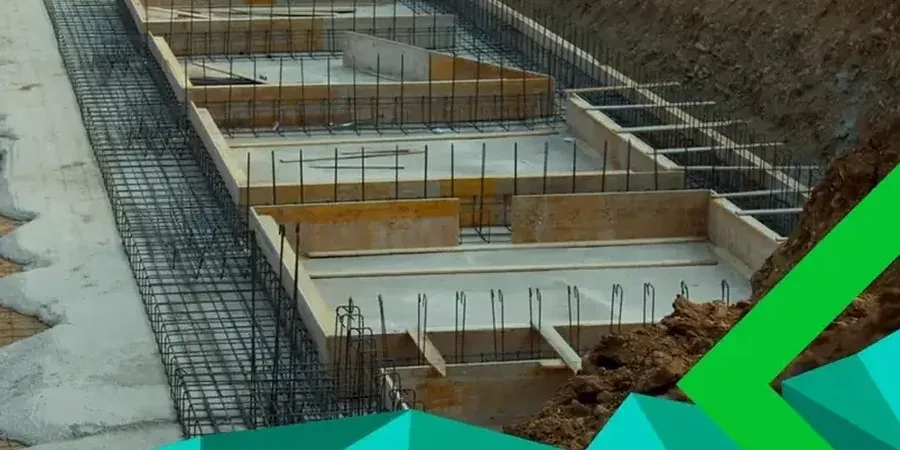
Foundation engineering in Ottawa represents far more than simply placing concrete in the ground. It encompasses the comprehensive analysis, design, and construction of the structural elements that transfer building loads safely to the underlying earth. This category of geotechnical work is fundamental to every construction project, from single-family homes in Barrhaven to high-rise towers in the downtown core. A properly designed foundation mitigates risks associated with settlement, frost action, and bearing capacity failure. In a city defined by its dramatic seasonal swings and complex post-glacial geology, the expertise embedded in foundation design is not a commodity; it is an essential safeguard for structural longevity and public safety.
Ottawa’s subsurface conditions are a direct legacy of the Champlain Sea, which inundated the region approximately 12,000 years ago. This history deposited thick sequences of sensitive marine clays, particularly Leda clay, across much of the urban landscape. These soils are notorious for their metastable structure; they can lose significant strength when disturbed or saturated, creating a high risk of large-scale landslides and excessive long-term consolidation settlement. Beyond the clay belts, foundation designers frequently encounter glacial till, which provides excellent bearing capacity, and areas of shallow bedrock, predominantly limestone and shale, in the western and northern sectors. Understanding this intricate geological mosaic is the first critical step in selecting an appropriate foundation system.
The practice of foundation engineering in Canada is governed by rigorous national standards. All designs must comply with the National Building Code of Canada (NBC), which is adopted with specific supplements by the Province of Ontario. The technical backbone for geotechnical design is the Canadian Foundation Engineering Manual (CFEM), complemented by CSA standards. For deep foundations, engineers adhere to CSA S6 for bridge work or detailed geotechnical codes for buildings, while concrete design follows CSA A23.3. Crucially, Ontario’s Professional Engineers Act mandates that all foundation designs must be sealed by a licensed professional engineer registered with Professional Engineers Ontario (PEO). These legal and technical frameworks ensure that every foundation, whether a straightforward shallow foundation design or a complex deep system, meets strict performance criteria for ultimate and serviceability limit states.
The type of project dictates the foundation strategy. Lightly loaded residential and low-rise commercial structures on competent glacial till are ideal candidates for spread footings, which distribute loads directly near the surface. However, where weak Leda clay extends to significant depths, or for heavy, settlement-sensitive structures like hospitals and mid-rise condominiums, a pile foundation design becomes necessary to bypass the problematic soil and transfer loads to a firm stratum or bedrock. Infrastructure projects, such as bridges and overpasses, almost exclusively rely on deep foundations like driven steel H-piles or drilled caissons to resist lateral and uplift forces. In Ottawa, the demand for deep foundation expertise is particularly pronounced in areas undergoing urban intensification, where taller buildings impose unprecedented loads on the ancient marine clays.
Ottawa's unique post-glacial geology features extensive deposits of sensitive Leda clay, which is prone to sudden strength loss and large-scale landslides when disturbed. This, combined with severe freeze-thaw cycles that can cause frost heave, creates a highly challenging environment. A foundation that works perfectly in stable bedrock regions can fail catastrophically here if not specifically designed to manage these local soil conditions.
Shallow foundations, such as strip or pad footings, transfer structural loads to the soil near the ground surface and are used when competent soil exists at a shallow depth. Deep foundations, like driven piles or drilled shafts, bypass weak or compressible surface layers to transfer loads to deeper, more competent strata or bedrock. The choice depends entirely on the bearing capacity and settlement characteristics of the underlying soil profile.
Foundation design in Ottawa is primarily governed by the Ontario Building Code, which is based on the National Building Code of Canada. The technical reference is the Canadian Foundation Engineering Manual (CFEM). Additional mandatory standards include CSA A23.3 for concrete structures and CSA S6 for bridge foundations. All final designs must be sealed by a Professional Engineer licensed in Ontario.
A geotechnical investigation is the essential precursor to any foundation design. It determines the soil stratigraphy, groundwater levels, and engineering properties like shear strength and compressibility through boreholes and laboratory testing. Without this site-specific data, engineers cannot accurately assess bearing capacity or predict settlement, making it impossible to select a safe and cost-effective foundation type compliant with Ontario's code requirements.