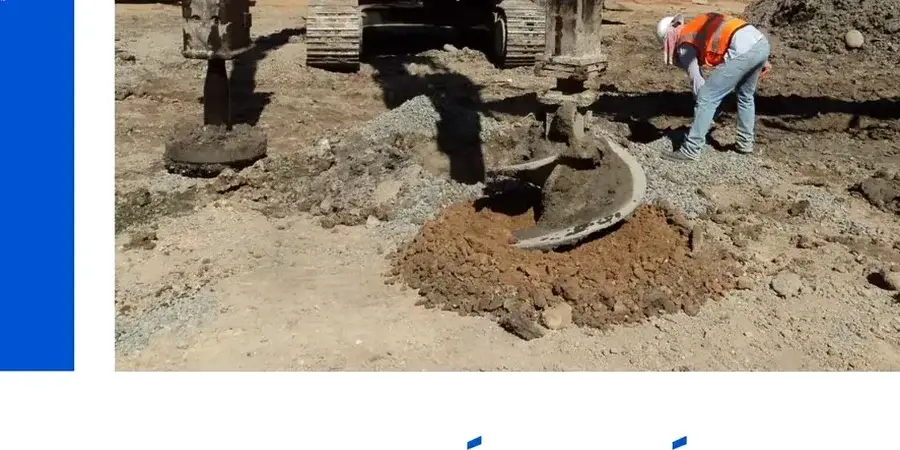
Ground improvement in Ottawa is a specialized branch of geotechnical engineering focused on modifying the in-situ properties of soil and rock to meet the demands of modern construction. The region's unique post-glacial landscape means that developers frequently encounter challenging subsurface conditions, including thick deposits of soft, compressible marine clays—notably the sensitive Leda clay—and loose, water-bearing granular soils. These natural formations present significant risks such as excessive settlement, slope instability, and liquefaction potential during seismic events. A comprehensive ground improvement strategy is therefore not merely an option but a fundamental necessity for ensuring the long-term safety, performance, and durability of infrastructure in the National Capital Region.
Ottawa's geological setting is dominated by the Champlain Sea basin, which has left a legacy of fine-grained sediments that can be unstable and highly sensitive to disturbance. Leda clay, in particular, is notorious for its quick clay behavior, where undisturbed soil can abruptly transform into a liquid mass when overloaded or remolded. In other areas, particularly near former river channels and outwash plains, loose sands and silts are prone to densification and settlement under dynamic loading. These variable and often unpredictable ground conditions demand rigorous site investigation and a tailored approach to soil treatment. Understanding the local stratigraphy, groundwater regime, and the sensitivity of native soils is the critical first step in selecting an appropriate improvement technique.
The practice of ground improvement in Canada is governed by stringent national standards, primarily the National Building Code of Canada (NBC) and the detailed geotechnical requirements of CSA and provincial guidelines. In Ontario, the Ontario Building Code (OBC) adopts the NBC with supplementary provisions, and engineers must adhere to the Professional Engineers Act. Key technical references include the Canadian Foundation Engineering Manual (CFEM) and standards from the Canadian Standards Association, such as CSA-A23.3 for concrete design which often interfaces with improved ground. For seismic design, which is a critical driver for ground improvement in Ottawa, the NBC's seismic hazard maps for the region dictate the performance criteria that any soil treatment must achieve, ensuring that improved ground can resist earthquake-induced liquefaction or cyclic softening.
The types of projects requiring ground improvement in Ottawa are diverse, spanning from high-rise residential and commercial towers in the downtown core to critical municipal infrastructure and transportation corridors. Deep dynamic compaction or vibrocompaction design is frequently specified to densify loose granular fills and natural sands beneath building pads and road embankments, mitigating settlement and enhancing bearing capacity. For structures on soft, sensitive clays, techniques like preloading with vertical drains or rigid inclusions are often used to control post-construction settlement. Infrastructure projects, including bridges, overpasses, and water treatment facilities, rely on ground improvement to ensure stability on problematic soils, while residential subdivisions on former agricultural or marginal land routinely require mass soil stabilization to meet current building code requirements for foundation performance.
The primary purpose is to permanently modify the physical characteristics of a site's subsurface soils to meet specific engineering requirements. This typically involves increasing bearing capacity, reducing compressibility and future settlement, mitigating liquefaction potential in seismic events, and controlling groundwater flow, thereby making otherwise unsuitable ground safe and economical for the planned structure.
Ottawa's geology is dominated by sensitive Leda clays and loose post-glacial sands. The high sensitivity and potential for large settlements in clays often necessitate techniques like preloading or rigid inclusions. Conversely, loose sands prone to liquefaction during an earthquake are best treated by densification methods such as vibrocompaction or dynamic compaction. The selection is a direct response to these specific soil behaviors.
Ground improvement in Ontario is regulated under the Ontario Building Code (OBC), which adopts the National Building Code of Canada. Geotechnical design must follow the Canadian Foundation Engineering Manual (CFEM) and relevant CSA standards. The work must be performed under the supervision of a licensed Professional Engineer, ensuring the design meets all required limit states and performance criteria for the site's seismic category.
Key indicators from a geotechnical investigation include the presence of soft, thick clay layers with low undrained shear strength, loose sand deposits with Standard Penetration Test (SPT) blow counts below a critical threshold, high groundwater table, and the presence of uncontrolled fill. A predicted total or differential settlement exceeding the structure's tolerance under design loads is the definitive engineering trigger for requiring soil treatment.