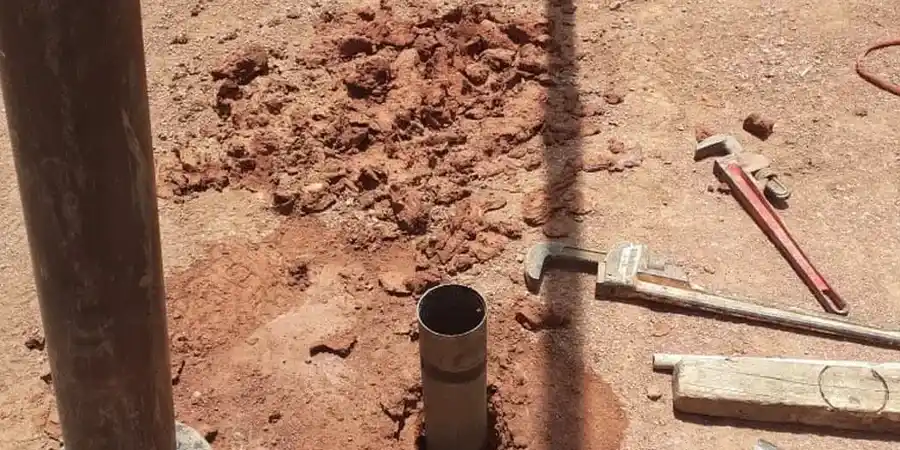
In-situ testing forms the cornerstone of any reliable geotechnical investigation in Ottawa, bridging the gap between laboratory analysis and the true, undisturbed behaviour of subsurface materials. This category encompasses a suite of field-based methods designed to directly measure the engineering properties of soil, rock, and groundwater in their natural state. Unlike sampling and lab work, which can be affected by sample disturbance, in-situ tests provide immediate, high-accuracy data on parameters such as strength, stiffness, permeability, and bearing capacity. For engineers and developers, this means a more confident foundation design, reduced earthwork unknowns, and a clearer picture of how the ground will interact with proposed structures under real-world loading conditions.
Ottawa's unique geological tapestry makes a robust in-situ testing program not just beneficial, but essential. The region is underlain by a complex sequence of glacial and post-glacial deposits, most notably the sensitive Leda clays of the Champlain Sea basin. These fine-grained soils are prone to significant strength loss when disturbed, a behaviour that cannot be reliably captured by standard penetration tests alone. In many areas, particularly near the city's waterways and in the east end, thick deposits of these clays are interbedded with glacial till and sand lenses. Further west and north, the landscape transitions to shallow bedrock of the Precambrian Shield, where determining rock mass quality and fracture flow through field permeability testing becomes critical. Understanding this variability requires testing that directly assesses how each stratum will perform.
Geotechnical investigations in Ottawa are governed by the Ontario Building Code (OBC), which references national standards set by the Canadian Standards Association (CSA) and the Bureau de normalisation du Québec (BNQ). For in-situ work, the most relevant guidelines include CSA A23.3 for concrete design, which often dictates the need for specific ground data, and various ASTM International standards that have been adopted for field testing procedures. The execution of a plate load test, for instance, follows a methodology consistent with ASTM D1195/D1195M to determine the modulus of subgrade reaction, a parameter directly required for the design of slabs-on-grade and pavements. Adherence to these norms ensures that the data collected is defensible, repeatable, and accepted by municipal building officials and peer reviewers across the National Capital Region.
The practical applications of in-situ testing in Ottawa are vast and span almost every type of construction project. For high-rise developments in the downtown core, precise measurements of in-situ shear strength in the sensitive clay are vital for designing deep excavations and shoring systems. Infrastructure projects, such as the LRT expansion and arterial road reconstructions, rely heavily on plate load tests to validate the compaction and bearing capacity of granular bases. Environmental and hydrogeological assessments for new subdivisions routinely require Lefranc or Lugeon permeability tests to model groundwater flow and design effective stormwater management systems. Even for smaller-scale commercial buildings, an in-situ permeability test can be the deciding factor in the feasibility of a septic system or a foundation drain, making these tests a critical early step in the development process.
The main advantage is the avoidance of sample disturbance. Ottawa's Leda clays are highly sensitive, meaning their structure collapses and strength plummets when physically disrupted by sampling, transport, and extrusion. In-situ tests like the field vane or cone penetration test measure the clay's true, undisturbed shear strength directly in the ground, providing a far more reliable parameter for slope stability analysis and foundation design.
In-situ permeability tests are mandated when groundwater flow rates are a critical design factor, such as for dewatering deep excavations in sandy aquifers, designing landfill liners, or assessing the groutability of fractured bedrock. Grain-size correlations from lab samples provide only a rough estimate and cannot account for macro-scale features like fissures in clay or joint networks in rock, making direct tests like the Lefranc or Lugeon essential for accurate hydrogeological modelling.
The Ontario Building Code requires geotechnical investigations to be thorough and reliable, effectively mandating in-situ testing whenever ground conditions are complex or variable. While it doesn't prescribe specific tests, the standard of care in Ottawa, enforced through municipal peer review, necessitates the use of direct methods like the plate load test for verifying fill compaction and bearing capacity, aligning with referenced ASTM and CSA standards to ensure the data is legally defensible.
A standard program would begin with boreholes with standard penetration testing to log the stratigraphy, followed by cone penetration testing with pore pressure measurement to continuously profile the sensitive clay's strength. A field vane test would calibrate the CPT data, and an in-situ permeability test in any identified sand layers would be performed to design a dewatering system. Finally, a plate load test might be used at the footing elevation to confirm design bearing pressures.